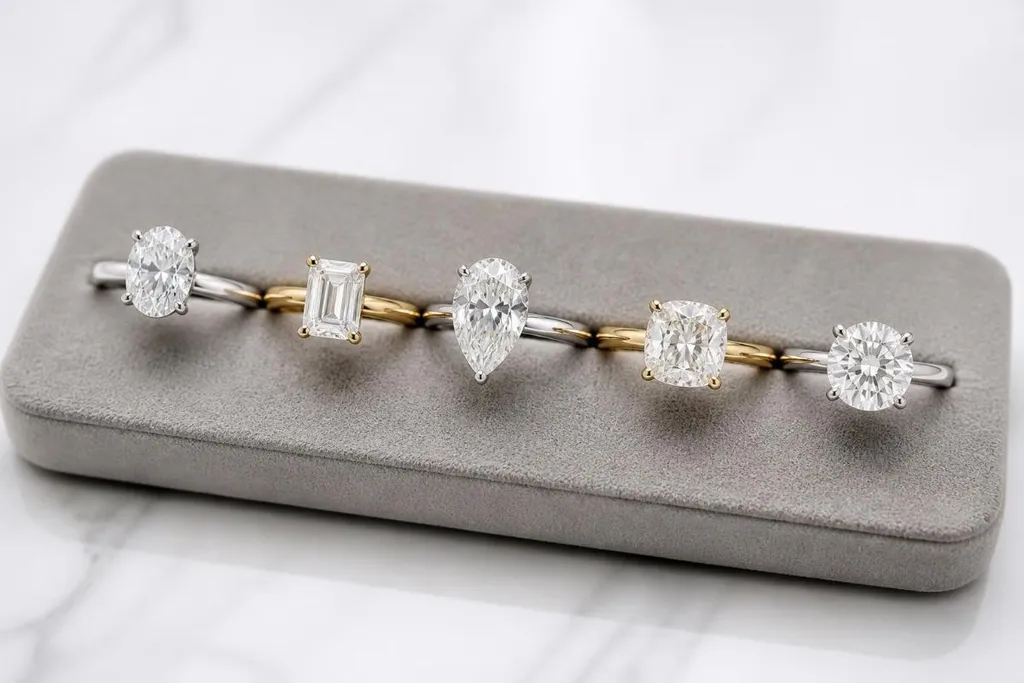
Choosing an engagement ring should feel exciting, yet an extensive collection can quickly make the decision more complicated than expected. Different stone shapes, settings, metals and design details can all look appealing for different reasons, particularly when browsing without a clear starting point.
The simplest approach is not to search for the “perfect” ring immediately, but to reduce the choices in stages. Browsing a wide variety of engagement rings can actually be useful at the beginning, as it helps establish which styles repeatedly catch your attention. From there, a few practical filters can turn an overwhelming selection into a manageable shortlist.
Start With the Stone Shape
Stone shape is one of the quickest ways to narrow a collection because it strongly influences the overall character of a ring. Round stones offer a timeless, balanced appearance, while oval and pear shapes can create an elongated look on the finger. Emerald cuts have clean lines and a more architectural feel, whereas radiant and cushion cuts combine softer proportions with plenty of visual presence.
Rather than comparing every available shape, identify two or three that genuinely appeal to you. Consider the wearer's existing jewellery as a useful clue. Someone drawn to understated, classic pieces may naturally prefer a round or emerald-cut design, while a person who enjoys distinctive jewellery might appreciate a pear, marquise or unusual setting.
This first decision can remove dozens of less relevant options without requiring you to settle on a particular ring.
Decide What Matters Most in the Setting
The setting determines far more than how the centre stone is held. It affects the ring's silhouette, sparkle, practicality and how easily it can be paired with a wedding band.
A solitaire keeps attention firmly on the centre stone and tends to suit someone who appreciates simplicity. Halo designs provide additional brilliance and can make the central stone appear more prominent. Three-stone rings offer greater visual impact across the finger, while designs featuring detailed shoulders or hidden accents provide interest without necessarily appearing elaborate from every angle.
Lifestyle deserves consideration here. A high-profile setting may appeal aesthetically, but someone who works frequently with their hands might find a lower, more streamlined design easier to wear every day.
Set Priorities for Stone Size, Quality and Budget
A larger centre stone is not automatically the better choice. Proportion, cut, setting and personal taste all influence how impressive a ring looks in practice.
For example, someone may prefer a 2-carat stone because they enjoy a strong visual presence or have longer fingers where a larger centre stone feels well proportioned. Another person may deliberately choose a smaller stone in favour of a particular cut, higher specification or more intricate setting. Neither approach is inherently superior.
Establishing a comfortable budget early helps make these trade-offs clearer. Instead of stretching every specification upwards, decide which two or three qualities matter most. That might mean prioritising size and shape, or focusing on craftsmanship and the overall design.
For couples considering lab-grown diamonds or gemstones such as moissanite, the same principle applies: compare rings according to appearance, quality and suitability rather than treating carat weight as the only meaningful measure.
Create a Shortlist and Compare Details
Once the preferred shape, setting style and approximate budget are established, create a shortlist rather than continuing to browse indefinitely. Around three to five serious contenders is usually enough to make meaningful comparisons.
Look at each ring as a complete design. Consider how the centre stone sits within the setting, whether the band feels too delicate or substantial, which metal complements the design, and how the ring might sit beside a future wedding band.
It is also worth imagining the ring outside the showroom or product photograph. Engagement rings are worn during ordinary working days, weekends, dinners and travel—not only special occasions. The best choice should therefore feel appropriate for everyday life as well as significant enough to mark the occasion.
Final Thought
A large engagement ring collection becomes much easier to navigate once personal preferences are turned into practical filters. Begin with stone shape, refine the setting, establish realistic priorities and then compare only the strongest candidates.
The aim is not to find the ring with the most impressive list of specifications. It is to find the design whose proportions, character and practicality feel right for the person who will wear it. Once that distinction becomes clear, narrowing down even an extensive selection can feel surprisingly straightforward.